

The Ratropolis Blog: Daily life with pet rats.
Saturday, October 31, 2015

Tuesday, August 4, 2015
Rats in the News: Children with Rats as Pets Do Better in School

Article: Kids with Pets Do Better At School, Especially Rat Owners, Study Says
A study commissioned by Pets At Home which surveyed 1000 pet-owning children between the ages of 5 and 16 years found that children who have pets do better in school, with rat-owning children performing the best.
So the next time our rats run off with my boys' homework, I will have to remember that they are not, in fact, stashing it in their cage to shred for bedding, but rather, they are helping to tutor them. It appears to be working. My oldest graduated Junior High with a silver Presidential Award for academic excellence and my youngest finished his last year at grade school with straight A's and made it into accelerated math. Many thanks are owed to our many rattie friends for helping them to achieve such accomplishments!
Friday, July 24, 2015
Rest in Peace, Burt

Burt was a very special boy. He was a great people rat and he really enjoyed life. He was a fighter, not letting his cancer get the better of him for most of the time he was ill. Even when he injured a leg and it became infected because of the steroid, he still sought to make the most of every day, despite his impaired mobility.

 |
| Burt's love of popcorn made these Christmas pictures possible. |
He took beautiful pictures - you could always see the smile in his face. He was happy to be here and happy to have rattie and people friends around him. He loved food and was a master hoarder. I always knew that when he refused his favorite foods, it would be time to let him go.
 |
| Burt's last photo shoot on the 4th of July |
Last Friday was that time. He wasn't eating and he was having difficulty just existing. His head bobbed up and down with every breath. I could tell he was miserable. He had experienced a bad spell earlier in the week, but he bounced back somewhat for a few days. When I saw him on Friday morning, I knew it was time to let him go peacefully. We had him put to sleep at our vets office at 11am on Saturday, July 17th.
Rest in Peace, Sweet Boy Burt. Play hard at the bridge. Your girls Bela, Ruby, and Jo are all waiting for you to join them, along with your first buddy from your original home, Ernie. You are truly missed.
 |
| Jeremy cuddling up with Burt on his last day. |
Tuesday, July 7, 2015
Turkey Tail Mushroom
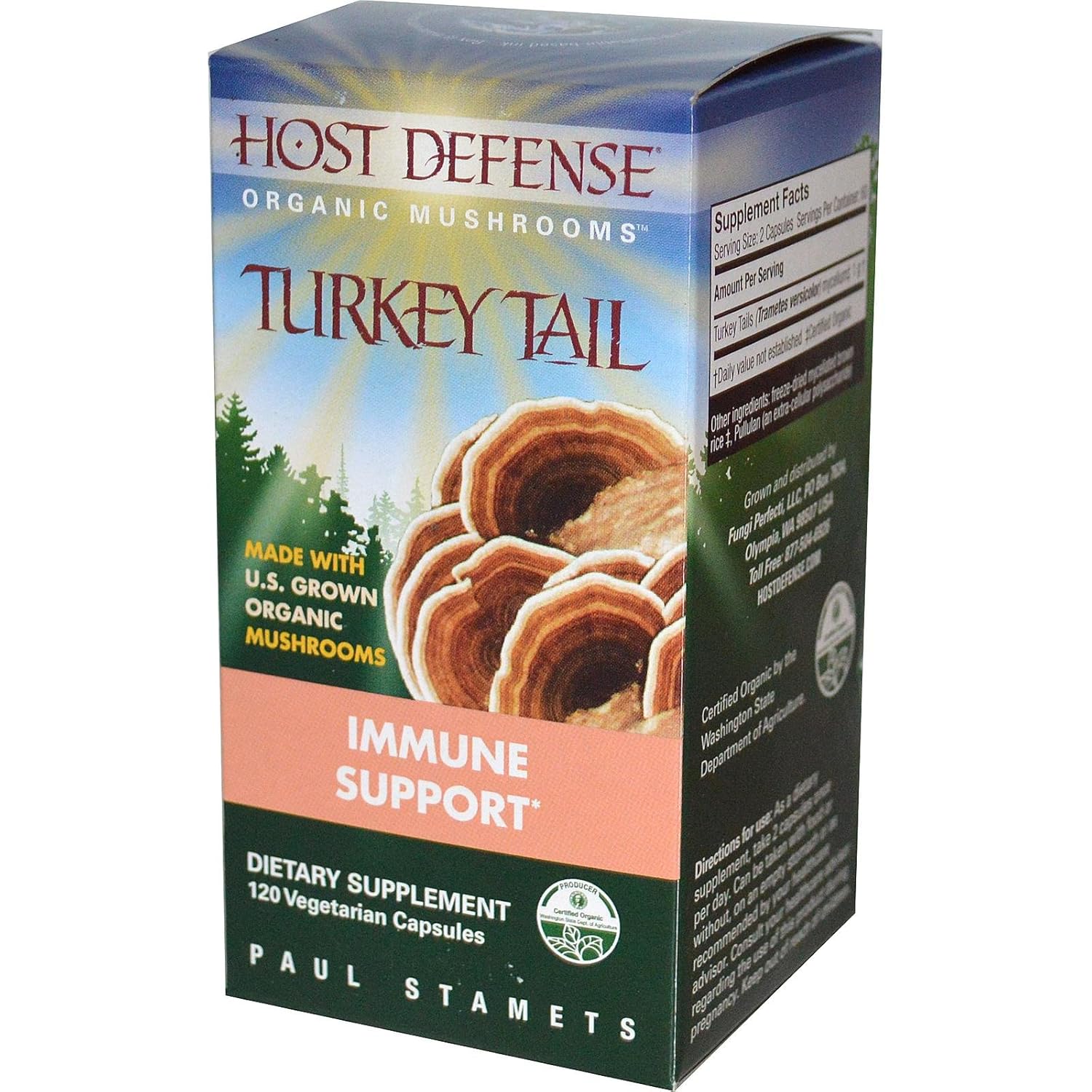
The biggest problems I see in my rats are cancers/tumors. I have had many rats die from such problems (pituitary tumors, lung tumors, internal abdominal tumors, and now Burt's lymphoma). Even when respiratory infections have been bad, there has often been an underlying lung tumor contributing to the problem. If there is anything I can do to prevent that, or at least to extend the lives of these rats, it is worth researching.
The supplement that keeps coming up regarding cancer in rats is Turkey Tail Mushroom. I did a little research into it and decided it was worth trying. What convinced me is the fact that the NIH actually funded a study that evaluated the effectiveness of Turkey Tail Mushroom. That study concluded that Turkey Tail Mushroom does indeed help the immune system to fight cancer. You can read more about that study and its findings in this article: Turkey Tail Mushrooms Help Immune System Fight Cancer.
That study and anecdotal evidence from rat owners who have used Turkey Tail Mushroom with positive results have led me to conclude that it is worth giving it a try. For now, I am using it with Burt. Burt's lymphoma is pretty well established, so I don't expect it to cure him, but it is my hope it may extend his life. From what I have read, you cannot overdose on this supplement and there are no known adverse effects, so it won't likely hurt.
 |
| You can see the large lump on Burt's thigh. |
I have been using it with Burt since he was diagnosed in April. I have also been given him steroids, so there is no way to determine if any benefit I see is from the steroid or the Turkey Tail Mushroom. I started out by giving him half a capsule a day (I open the capsule and mix the powder inside with baby food (turkey and sweet potato) or other foods that I think might blend well with mushroom (eg, spaghetti). I increased that amount to one capsule a day when I saw that he liked the taste of the supplement and that it did him no harm (although some days I mix it in food that he shares with his two cagemates, so he only gets 1/3 the capsule on those days).
I would like to say that Burt's tumor is shrinking and that he is getting better on the supplement, but that is just not true and would be too much to hope for. His tumor has grown slowly to the point where it is quite large and I am starting to see his body undulate with his breathing - a common sign of cancer in my previous rats. So the cancer is clearly progressing. However, in the three months since his diagnosis, the lymphoma has not visibly spread to any other area of the body (he has no new lumps - although it may be spreading to internal organs - but the vet says his lungs are still clear and sound good). He is also eating well and has a positive uplifting attitude (ie, he is not acting like a sick rat). His eyes are bright and he interacts with us as normal.
A couple of weeks ago, Burt injured his right rear leg (the leg opposite the thigh with the lymphoma). Because of the steroid, his immune system is weak and the injury became infected. An abscess developed and the leg swelled up and was not useable. The vet drained the abscess and we gave his foot Epsom salt soaks while putting him on an antibiotic. His spirits diminished for a while, as he could barely move with one leg limited in mobility from the tumor and the other limited because of injury. I thought for sure that this setback would extinguish the fight in him and he would kind of give up, stop eating, and let the cancer take over.
That did not happen. His leg did not heal perfectly and mobility is still limited, but the infection was treated, and as he regained some of his mobility, his spirits returned to normal. You can see from his 4th of July pictures that even though he does have cancer, he does not acknowledge it. He continues to live his life as much like a healthy rat as possible.
 |
| Despite his lymphoma, you can see Burt is a happy rat with good quality of life still. |
I have no illusions, though. While his tumor continues to grow, his spine is getting sharper (I can feel it through his skin) and his overall weight is gradually diminishing as the tumor steals his nutrients. The writing is on the wall and Turkey Tail Mushroom is not going to cure him. But I do believe the possibility is there that the supplement is helping his immune system to fight and give him quality of life in these last days/weeks/months.
I don't see Turkey Tail Mushroom as being the cure to cancer. But I do have hope that it may help prevent or delay these problems in healthy rats. I intend to start adding it to the food (in smaller dosages - perhaps one capsule shared among all the rats each day) on a regular basis to the diets of the healthy rats. If it really does help the immune system fight cancer, it may help prevent the cancer from developing - or if it develops, postpone the start of that development so that they live longer. I don't have any personal evidence to say that it will do this, but given the number of rats who have died too young (two years seems to be a common age to start seeing these problems - 1 and 1/2 years for PT), it certainly wouldn't hurt to try it and see if my rats start living longer or if the rate at which I see cancer/tumors develop goes down any.
Saturday, July 4, 2015
Happy July 4th!

Burt was our model for the 4th of July photo shoot this year. He is doing really well despite his lymphoma (and also an injury he sustained to his right rear leg opposite the tumor). His breathing is visible, a sign that the cancer is progressing, but his appetite is good and his spirits are bright and he just can't resist hamming it up for the camera. I love to photograph Burt - he always seems to have a smile on his face. Some of the other shots:

 |
| You can really see the tumor on his thigh in this pic. |

Lilly was also up for some 4th of July pictures. She did marvelously well - a lot more outgoing than our first photo shoot attempt at Valentine's Day.


Thursday, May 28, 2015
Efficient Layout for Cutting CN Liners out of U-Haul Furniture Pad

I have been making cage liners for the Critter Nation from U-Haul furniture pads for a while now. I know that one furniture pad is enough to make all the liners for two dual Critter Nation cages, minus one shelf, but only if the pieces are laid out efficiently. Unfortunately, I keep forgetting how they need to be laid out.
So today, I decided to take a picture of the proper layout so that I can remember how it goes in the future. Note that the bottom and top levels are the same dimensions (except for the cutout), so they are completely interchangeable. Also note that you can replace any of the top level/bottom level pieces with two shelf pieces, with the longer edge laid out adjacent to each other (this produces slightly more waste, but is still very efficient).
If you always remember to layout your pieces in this fashion, interchanging them as described above when needed, you will be sure to maximize the number of liners you can cut from one furniture pad.
Friday, May 15, 2015
What to Do for a Degloved Tail
 |
| Lilly with her degloved tail |
(Warning: Graphic Image at Bottom of Post)
Monday night, when we took Lilly and her boys out to play, we noticed that Lilly had degloved the last 1 1/2" of her tail. Degloving occurs when the skin of the tail separates from the body, exposing the bone and tissue underneath. She may have gotten it caught somehow, or she may have injured it during a scuffle with her boys, or her tail may have gotten bit by one of the rats in the adjacent cage, despite the cages being 5" apart. The latter is the most likely, as our Hammie loves to nip at tails that find their way through bars (tails on rats he lives with are fine, though). I have moved the cages a little further apart, so hopefully all tails will be safe in the future.
Degloved tails are probably one of the most common injuries in rats. This is because the degloving mechanism is a part of a rat's natural defense against predators. Should a predator catch the rat by the tail, the skin can easily detach and separate from the tail, allowing the rat to escape and leaving the predator with a section of tail skin. However, this mechanism can also kick in when an accident occurs - another rat accidentally (or on purpose) nips a tail, the tail gets caught on something, a door pinches a tail as it closes, a tail gets stepped on, or someone ignorantly picks the rat up by a tail (yet another reason you should never pick up a rat by the tail).
If there is extensive skin loss, you should wrap the exposed area in a clean cloth to control bleeding and seek veterinary assistance immediately, as the rat could go into shock.
In most cases, the amount of skin loss will be minor. If it is just the tip of the tail that is affected, you can usually begin treatment at home and see your regular veterinarian at the next available appointment. Degloving is rarely a life threatening condition, since it evolved as a way to save a life, not take it. So if there is minimal skin loss, there is no need to panic. That doesn't mean it isn't extremely painful or that you don't need to treat it properly, but with proper care, your rattie will likely recover just fine.
The tail should be cleaned and antibiotic ointment can be used to try to prevent infection. Pain medication is helpful. For Weasel, we gave him some Children's ibuprofen. For Lilly, we had metacam on hand from her spay, so we used that instead (we used the higher 1 mg/kg dose because I had seen that dosage used in a case study in the Rat Guide). After the wound is cleaned, antibiotic ointment applied, and pain meds administered, the cage liners and litter should be changed, and the rat can be returned to the clean cage. It is usually safest to keep the injured rat in a hospital cage, separate from the other rats, so that the other rats don't accidentally hurt him/her, until you have the okay from the vet. For Lilly, we closed the ramp between the top and bottom levels so that Lilly could recover peacefully on the bottom while the boys wrestled on top.
An appointment with the vet should be made as soon as available (but an emergency visit isn't necessary unless extensive skin loss has occurred or the rat is not behaving in a healthy way). The vet will examine the wound and may prescribe antibiotics and/or pain medication as deemed necessary. The exposed bone will need to come off. Sometimes, it will fall off naturally and the vet will tell you to wait a week to see if that happens. If it does not fall off on its own accord or if the degloving is more extensive, a surgical amputation of the exposed bone may be required.
Lilly has seen the vet and has had the bone amputated and she is recovering fine. She is back with her boys and does not seem to be in further pain. Likewise, Weasel recovered easily from his degloving incident.
For more information about degloving, see the Degloving Injury article of the Rat Guide.
 |
| Degloved Tail |
Subscribe to:
Posts (Atom)